
30 APRIL – 4 OCTOBER 2026
SPAZIO MARAINI – VILLA MALPENSATA
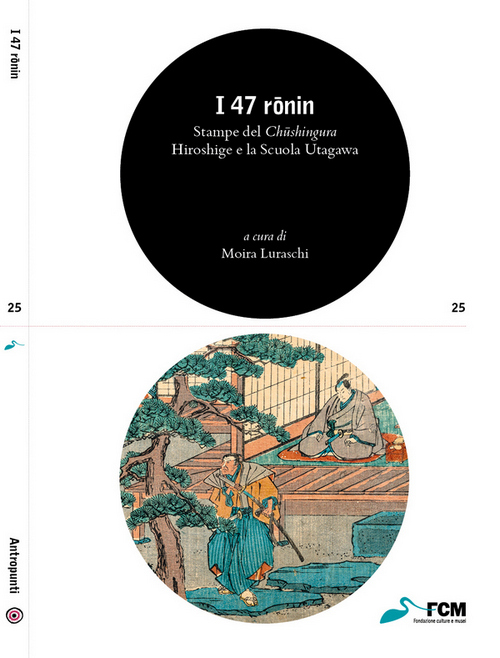
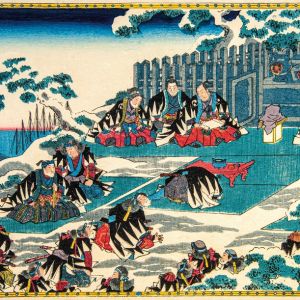
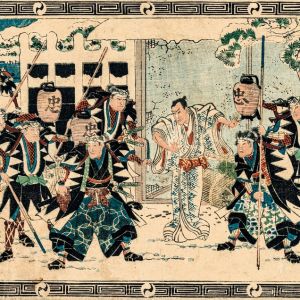
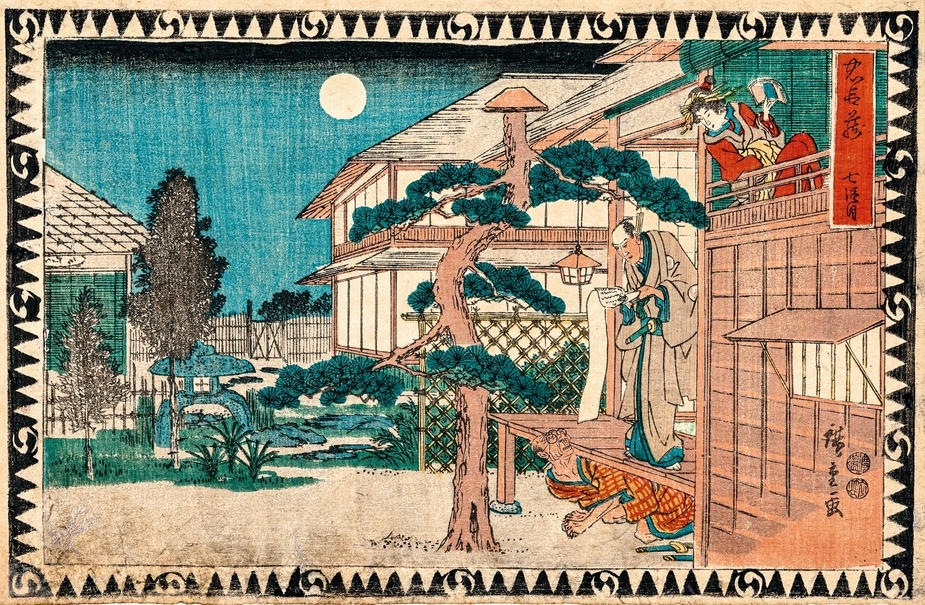
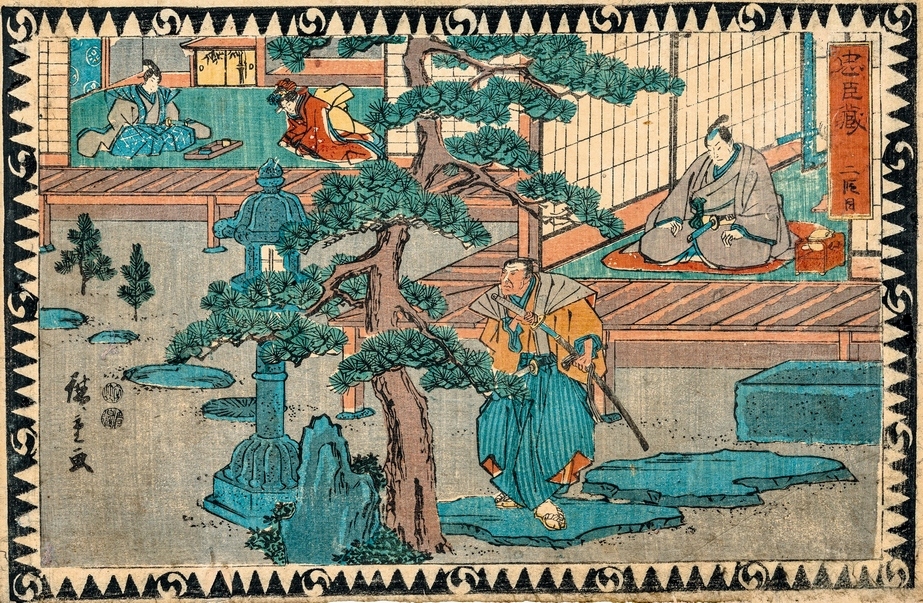
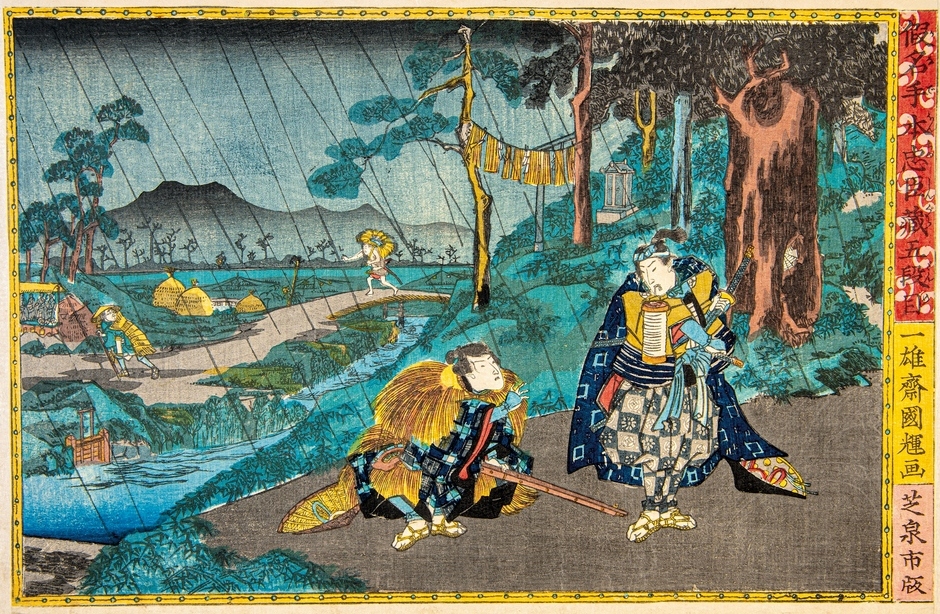
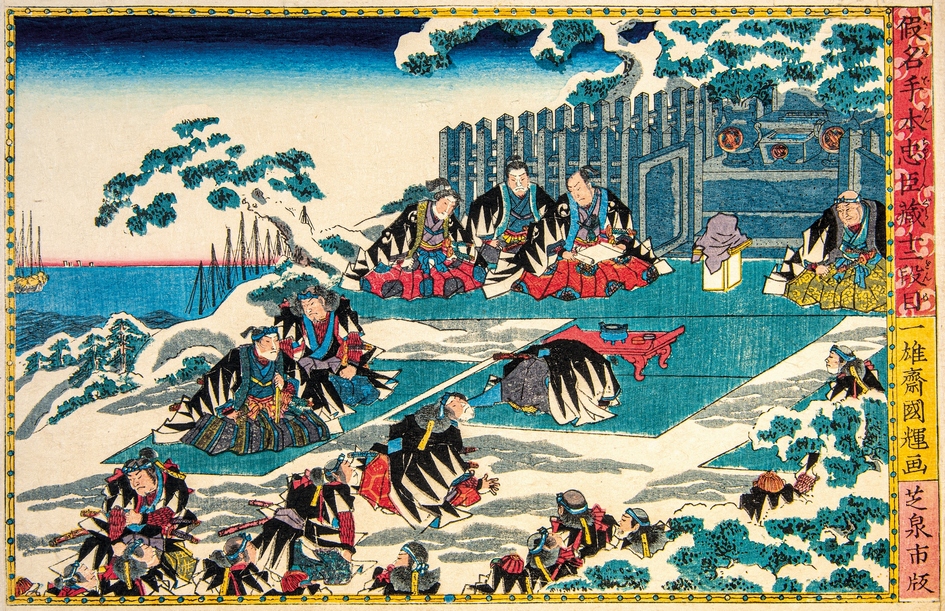
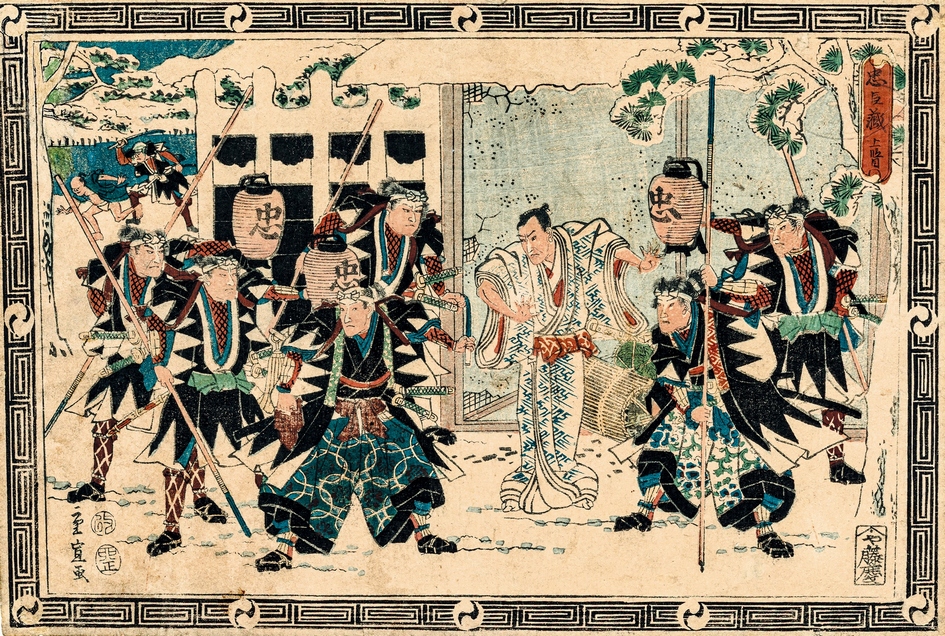
The exhibition presents a comparative display of three series of woodblock prints by Hiroshige (1797–1858), Shigenobu (1826–1869) and Kuniteru (active around the mid-19th century). The project, curated by Moira Luraschi (MUSEC), highlights both the similarities and differences between the aesthetic languages and styles of the three artists, who were members of the Utagawa School, the most important and prolific school in 19th-century Japan. The prints share a common subject: Chūshingura (‘The Loyal Retainers’), the famous kabuki play that tells the story of the revenge orchestrated by a group of forty-seven masterless samurai, the so-called rōnin, against those who had killed their lord and sullied his honour. Chūshingura has been performed continuously for almost three hundred years, thus keeping the memory of a historical event alive.
Three artists, two aesthetic approaches
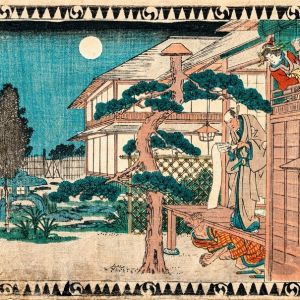
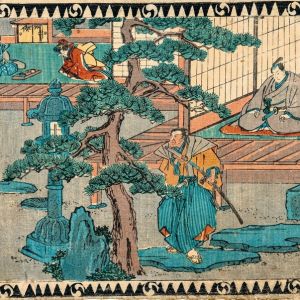
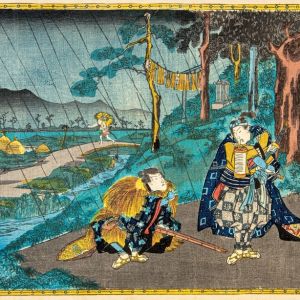
Given Hiroshige’s significance in the history of painting, his prints are particularly noteworthy. Although the main focus is on the key scenes from the individual acts of the drama, Hiroshige also devotes considerable attention to the landscape, a field in which he was regarded as an undisputed master. The landscape is never an idyllic or neutral backdrop, but rather echoes and amplifies the emotions that animate the characters in the scene, usually placed in the foreground. Hiroshige thus achieves a new visual synthesis, creating a dialogue between the landscape and the foreground scene, which concentrates upon itself the meanings of the entire act. His prints are graphically clear and convey the expressive power typical of kabuki. Hiroshige’s influence is evident in the work of Shigenobu, his pupil and son-in-law, who was also head of the Utagawa School for a brief period. He too condenses the energy and emotions of an act into a single main scene, though he does not match his master’s excellence in the treatment of the landscape. Kuniteru, on the other hand, moves in a different aesthetic direction, depicting several scenes from the same act on a single sheet, across different visual planes. His prints are extremely lively, crowded with characters and events, but they lose the expressive power of kabuki in favour of a depiction that is perhaps somewhat more didactic. All the prints are in horizontal format (ōban yoko-e), the most suitable for visually rendering the scene of the kabuki theatre.
The exhibition
The prints in each series depict one or more scenes from the eleven acts of Chūshingura; a twelfth work serves as an epilogue. In the display cases, one for each act, the prints are always arranged in the same order: Hiroshige’s print on the left, Shigenobu’s in the centre and Kuniteru’s on the right. Hiroshige’s series is incomplete: the print relating to the eleventh act is missing. The works by Hiroshige and Shigenobu come from the Perino Collection. Kuniteru’s works belong to the Marco Fagioli Archive. As a counterpoint, on the walls are reproductions of several rōnin, taken from prints by Utagawa Kuniyoshi (1798–1861) belonging to MUSEC. Visitors are provided with a free exhibition guide, which summarises the events of Chūshingura depicted in the prints.
The 47 Ronin. History, theatre and visual memory
A famous kabuki play that has been performed continuously for almost three hundred years, Chūshingura keeps the memory of a historical event alive. One night in December 1702, a group of masterless samurai (rōnin) attacked the castle of the man who had caused their lord’s death. The man was killed. The attack brought an end to a two-year wait, during which the rōnin had secretly harboured the intention to avenge the injustice and to honour their lord and themselves. However, the samurai’s moral code (bushidō) clashed with the law prohibiting personal revenge. Recognising their noble motives, however, the shōgun sentenced them to ritual suicide by disembowelling (seppuku). The rōnin thus went down in history as an example of undying loyalty, honour and courage. The scenes from Chūshingura by Hiroshige and the Utagawa School, as well as by many other artists of the time, helped to make the forty-seven rōnin even more popular, even outside Japan, extending to arthouse cinema and comic books.