

VILLA CIANI – LUGANO
The shy and mysterious life of a great Swiss photographer, who died too young, told through his work and the traces of his travels in the Sahara, desert, myth and topos of the soul. One hundred years after his birth, Switzerland rediscovers Peter W. Häberlin (1912 – 1953) by dedicating an exhibition to him at Villa Ciani. The museum’s research to unearth the traces and life of Häberlin, through the testimony of friends, fellow travellers of surviving relatives or their diaries and accounts, has been exciting and adventurous, and allows us to see and discover the work of what can be considered one of the greatest Swiss photographers of the last century. The 128 photographs, arranged according to a narrative path that enables the different themes and salient features of Häberlin’s photography and worldview to be clarified, are on public display for the first time and come from prints of negatives held by the Swiss Foundation of Photography in Winterthur, which were specially made for the temporary exhibition. Enriching the photographic narrative is a selection of Tuareg material culture objects from the Collections of the National Museum of Anthropology and Ethnology of the University of Florence.
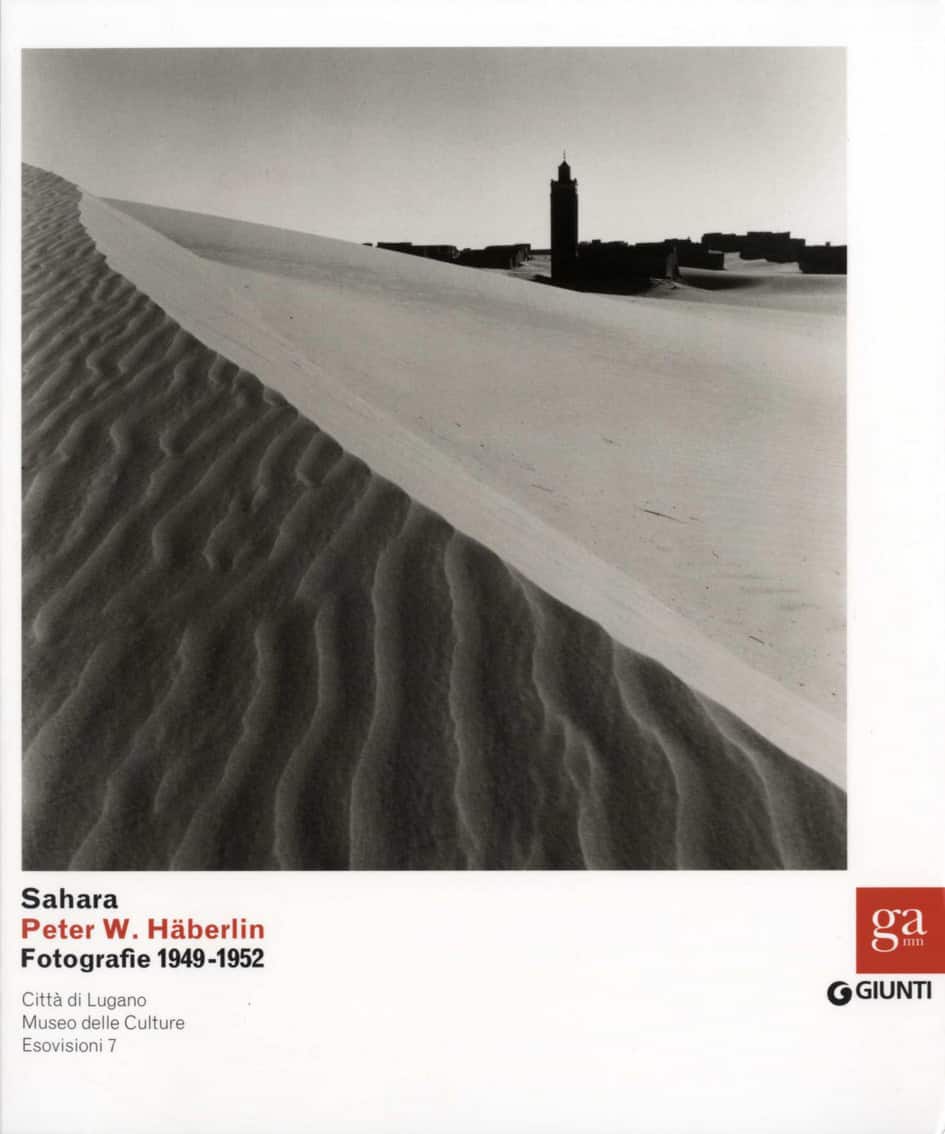
In his passion for the African continent, one can discern a response to the dramatic years of the war, a tension towards a place that is still unspoilt and not profoundly disrupted by the conflict. A continent where, beneath the surface, one glimpses the possibility of another society, ideal and timeless, where man still lives in an authentic relationship with nature. His images portray African populations in a sort of timeless dimension in which the documentary and narrative intent gives way almost entirely to a form of contemplation. The ethnographic subject is projected directly into a philosophical and symbolic realm, as well as into a search for beauty in clear inner dialogue with the photographer’s spiritual quest. Häberlin’s travels took place between 1949 and 1952. Slow journeys. Unhurried. A kind of personal exploration of the world, in which facts are eclipsed and even ethnological relief gives way to a poetics of disenchantment, which veers decisively in an aesthetic and anti-historical direction. The result is images that live in the domain of direct light, so sharp as to seem sculpted, to reject shadows if possible. Some of his photographs were collected in the volume Yallah, published with a preface by the American writer Paul Bowles, and published posthumously in 1956. One of the most widely read American weeklies, “The New Yorker”, wrote that the reportage was the work “of one of the great photographers of our time, capable of showing, as only art can, what would otherwise remain hidden”. The book had been completed by his father with the help of the American writer Paul Bowles, in whose most famous work, Tea in the Desert, used by Bernardo Bertolucci as the screenplay for the film of the same name, Yallah’s images seem to peep out of every description of the environment.
Häberlin realised his Trans-Saharan reportage between 1949 and 1952, an immense series of photographic shots that resulted from four journeys (of one of which very little information has been found), which he made following the ancient caravan routes from Algiers across the Sahara to northern Cameroon. Shortly after his wanderings on the African continent he met his death in 1953 in a tragic accident on the eve of another important departure, this time for Mexico. Häberlin’s biography is to this day partly mysterious. It has not been easy, though very stimulating, to trace his existential and professional stages, nor to outline his many travels, acquaintances and readings. Born in 1912 in the rural village of Oberaach, in Switzerland (Canton Thurgau), his strong tendency towards travelling, by whatever means available, is undeniable. Häberlin seems to use photography to accompany his slow movement through the world, respecting his own times rather than those of newspapers and the market.


“Esovisioni” is a cycle dedicated to the peculiarities and paths of viewing cultures through the photographic lens. The working hypothesis is that the photographer, taking the exotic image as a pretext has, consciously or unconsciously, returned his own inner vision, fertilising the collective imagination with artful images and stereotypes of different cultural realities.